
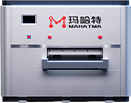
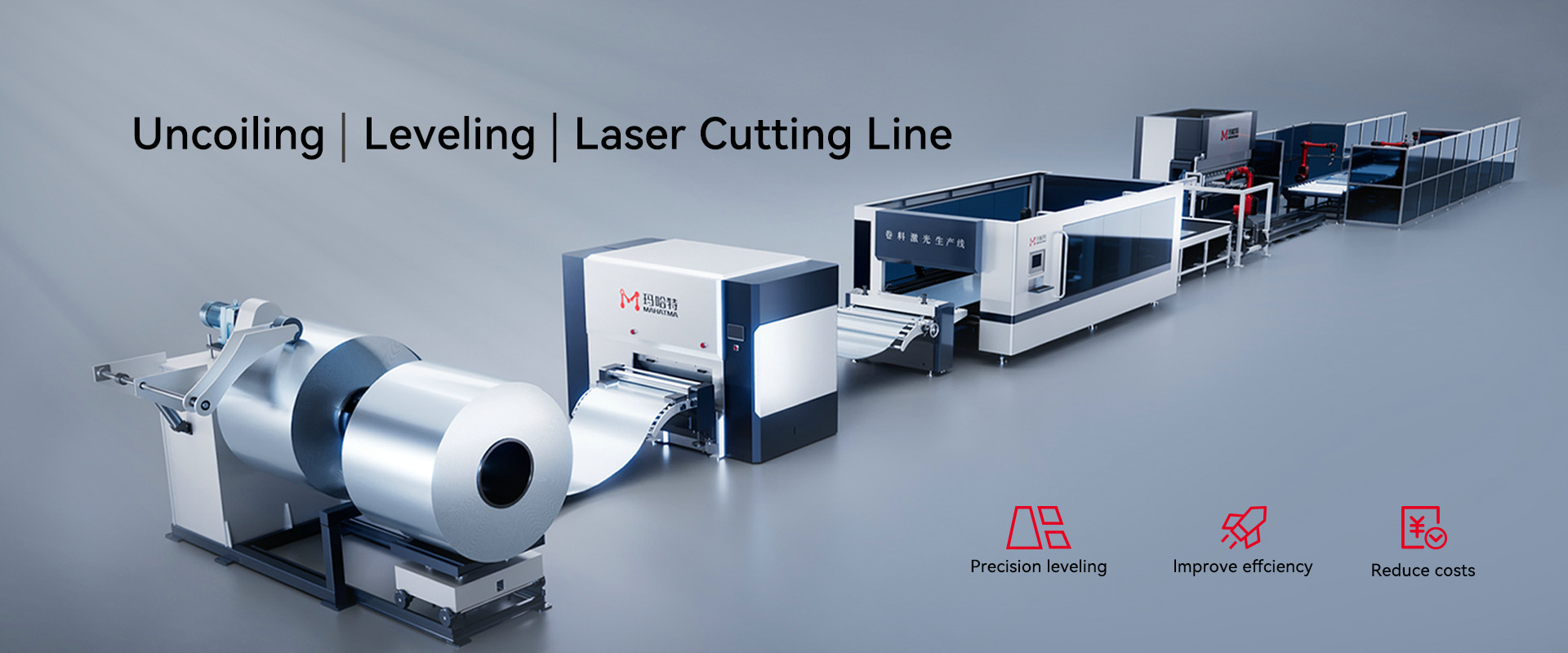



In the field of metal processing, material flatness directly affects the quality of subsequent processes and the precision of finished products, making it an indispensable fundamental step in the manufacturing system. Recently, with the deep integration of mechanical structural optimization and intelligent control technology, the new generation of steel plate leveling machines is providing more reliable material preprocessing solutions for the manufacturing industry through process innovation. Mahatma, as an equipment manufacturer specializing in leveling technology for many years, offers valuable practical insights into the industry through its technological evolution.
Limitations and Challenges of Traditional Leveling Processes
Traditional steel plate leveling primarily relies on mechanical or basic hydraulic equipment, which generally suffers from three major technical bottlenecks: first, the leveling parameters are overly dependent on operator experience, making it difficult to achieve precise matching for different materials; second, the structural rigidity of the equipment is insufficient, leading to secondary deformation when processing high-strength steel and thick plates; third, the lack of process monitoring and data feedback mechanisms makes it challenging to form a closed-loop for process optimization.
A technical director from an engineering machinery manufacturer admitted: "We once processed a batch of 10mm thick Q355B steel plates. After traditional leveling, the surface appeared flat, but significant deformation still occurred during laser cutting, causing difficulties in structural component assembly. This is not just an equipment issue but a manifestation of a disjointed process chain."
Industry data shows that approximately 60% of manufacturing enterprises are forced to add manual correction steps due to insufficient steel plate flatness, increasing overall manufacturing costs by an average of 15%. How to achieve "one-time perfect leveling" has become a common technical challenge for the industry.
Intelligent Control Technology Reshapes the Leveling Process
In response to the challenges mentioned above, Mahatma has established a correlation model of "material properties - equipment parameters - process effects" through years of technological accumulation.
Its new generation of steel plate leveling machines adopts multi-dimensional innovative designs. The first is the intelligent material property recognition system. By accumulating test data on a large number of steel plates with different materials, thicknesses, and rolling processes, a mapping relationship library of material yield characteristics, springback rates, and leveling parameters has been established. When new batches of materials enter the system, optimal initial parameters can be quickly matched, significantly reducing debugging time.
The second is dynamic zonal leveling technology. The equipment is equipped with multiple high-precision sensors that collect real-time deformation data of the materials. Through adaptive algorithms, the pressure distribution of each leveling roller is dynamically adjusted. This fine-tuned control method transforms the leveling process from rough overall pressure application to targeted zonal treatment.
The third is residual stress management innovation. Unlike traditional approaches that focus only on surface flatness, the new generation of steel plate leveling machines integrates a stress detection module to monitor the internal stress distribution of materials in real-time during the leveling process, ensuring dimensional stability of the treated steel plates in subsequent processing. Experimental data show that steel plates processed using this method exhibit a significantly reduced springback rate after 24 hours.
Practical Application: From Technological Breakthrough to Value Creation
After introducing advanced leveling equipment, a heavy equipment manufacturer used it for the preprocessing of 20mm thick high-strength steel plates. In the past, multiple rounds of repeated leveling and manual correction were required, resulting in long processing times per piece and persistently high rework rates. With the new process, the first-pass qualification rate has significantly improved, processing time has been greatly reduced, and substantial annual savings in rework costs have been achieved.
At the site of another home appliance structural component manufacturer, leveling 0.6mm ultra-thin stainless steel plates was a long-standing process bottleneck. Traditional equipment, due to limitations in roller design, often left pressure marks on the material surface. After the implementation of Mahatma's customized belt-supported non-destructive leveling solution, surface quality significantly improved, and the first-pass qualification rate for subsequent laser cutting rose to a high industry level, with customer satisfaction increasing accordingly.
Notably, these technological advancements are deeply integrating with intelligent manufacturing. Equipment operation data can be connected in real-time to enterprise production management systems, achieving a leap from "single-machine optimization" to "production line collaboration." A supplier of automotive components reported that through the linkage optimization of leveling parameters and subsequent welding processes, the overall assembly qualification rate has substantially improved. This reflects the contribution of upgrading foundational processes to the overall manufacturing system.
Industry Outlook: The Return of Value in Foundational Processes
Industry experts point out that as manufacturing transitions toward high-quality development, the value of foundational process equipment is being reevaluated. A related industry report emphasizes: "While pursuing cutting-edge technology, refining foundational process links is equally important. The flatness of a steel plate often determines the reliability of the final product."
This concept is driving upgrades in industry standards. Recently revised technical specifications have, for the first time, included "long-term stability" as a core evaluation indicator, marking the industry's shift from focusing on "immediate flatness" to "persistent flatness."
In today's era of advancing the strategy to strengthen manufacturing, each refinement in foundational processes represents a solid step toward high-quality development for Chinese manufacturing. The technological evolution of advanced steel plate leveling machines reminds us that true manufacturing upgrades often start from overlooked "minor processes" and succeed through the scientific control of every detail. When a once uneven steel plate is restored to flatness through precise processes, it carries not only product precision but also the manufacturing industry's relentless pursuit of quality.